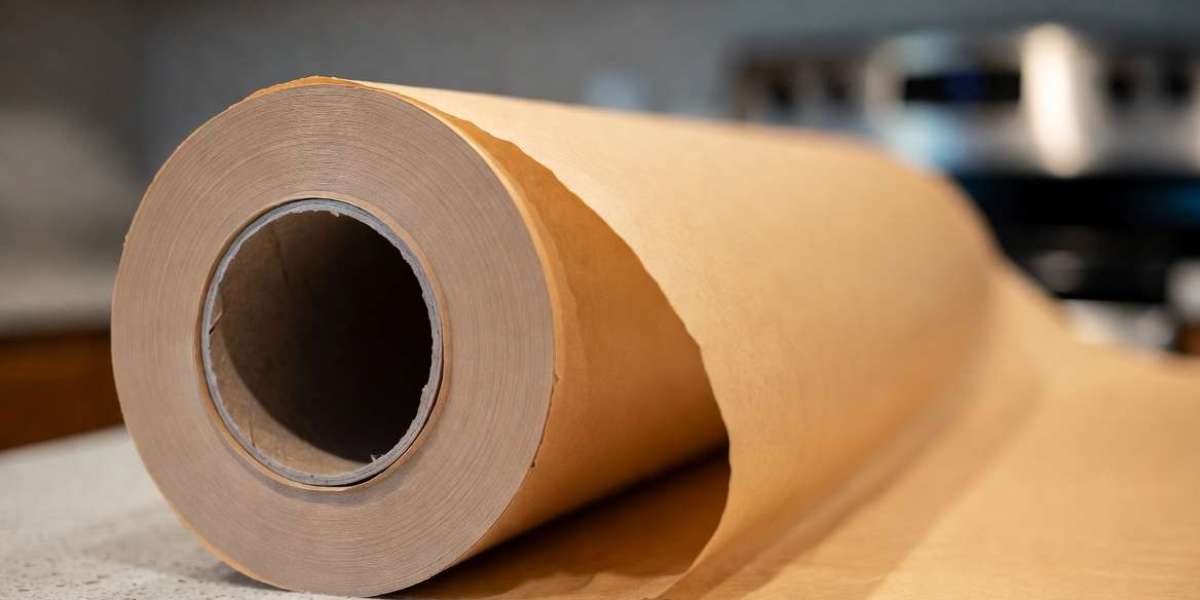

Choosing appropriate materials for food preparation can influence efficiency and consistency in professional baking environments. Baking Paper is commonly used as a protective surface between baked products and trays, helping reduce sticking during the preparation and baking process. For commercial bakeries, restaurants, food factories, and distributors, understanding the material structure, coating technology, and available formats is important when selecting products for different operational requirements.
The base paper provides the structural foundation of the finished product. Food-grade paper is generally selected for baking applications, with attention given to its grammage, thickness, flexibility, and surface characteristics. These properties affect how the paper is handled, placed on trays, cut, and stored. A suitable base material should be selected according to the intended application and the requirements of the coating and converting processes.
Silicone non-stick coating is widely used to improve the release characteristics of baking paper. It creates a treated surface that helps reduce adhesion between food and the paper. This is useful when preparing cookies, bread, cakes, pastries, and similar products that may otherwise stick to baking surfaces. Coating performance depends on the formulation, application conditions, and compatibility with the base paper. Even coating distribution is therefore an important consideration during manufacturing.
The production process generally includes paper selection, unwinding, surface preparation, silicone coating, drying, rewinding, and converting. Depending on the final product, converting may involve slitting large rolls into smaller widths or cutting the material into individual sheets. Appropriate tension control helps maintain stable processing, while accurate cutting contributes to consistent dimensions. Manufacturers also need to consider the condition of the paper during winding and packaging to reduce handling problems during transportation and storage.
Different formats are available for different business operations. Jumbo rolls are often suitable for industrial customers that have their own converting equipment or high-volume requirements. Standard rolls can support commercial kitchens and bakery supply distributors. Pre-cut sheets are convenient for businesses that use baking trays with regular dimensions and want to reduce preparation work. The choice depends on daily consumption, equipment compatibility, storage capacity, and the preferred workflow.
Product specifications should be reviewed before purchasing. Reference grammage may range from approximately 30–60 gsm, although actual specifications depend on the product design and application. Natural brown and white options can serve different market preferences. Buyers may also request customized roll widths, lengths, sheet dimensions, and packaging configurations. When purchasing for large-scale operations, it is useful to evaluate whether the selected dimensions can be integrated into existing equipment and production arrangements.
The applications cover a wide range of food preparation activities. Bakeries use paper when preparing cookies, biscuits, bread, cakes, and pastries. Restaurants and hotels may use it for routine baking tasks, while catering companies may prefer convenient sheet formats for high-volume food preparation. Industrial food processors may require larger rolls for continuous or repeated production activities. Retail and wholesale businesses also consider product sizes and packaging when selecting items for their distribution channels.
Storage conditions should not be overlooked. Paper rolls and sheets should be stored in a clean, dry environment and protected from moisture, dust, and physical damage. Packaging should remain intact during storage and transportation whenever possible. Before use, operators should check that the material is suitable for the intended oven conditions and food application. Temperature limits and food-contact compliance should always be verified against the documentation for the specific product.
For commercial procurement, evaluating samples can provide useful information about paper handling, coating performance, cutting characteristics, and compatibility with baking trays. Buyers should also request clear details about material composition, grammage, available dimensions, packaging, and customization. Comparing these factors helps wholesalers and food manufacturers identify products that fit their operational requirements rather than selecting materials based only on appearance or price.
Consistent material specifications are particularly important for businesses purchasing on a recurring basis. Changes in paper weight, coating, or dimensions may affect equipment settings and preparation procedures. Maintaining clear purchasing records and confirming product specifications before repeat orders can help reduce unnecessary variation. Baking Paper selection should therefore consider both immediate usability and long-term supply requirements. Businesses looking for roll-based formats and customizable product options can review https://www.guanghepaper.com/product/baking-parchment-paper-rolls-1/ when comparing products for bakery and food processing applications.