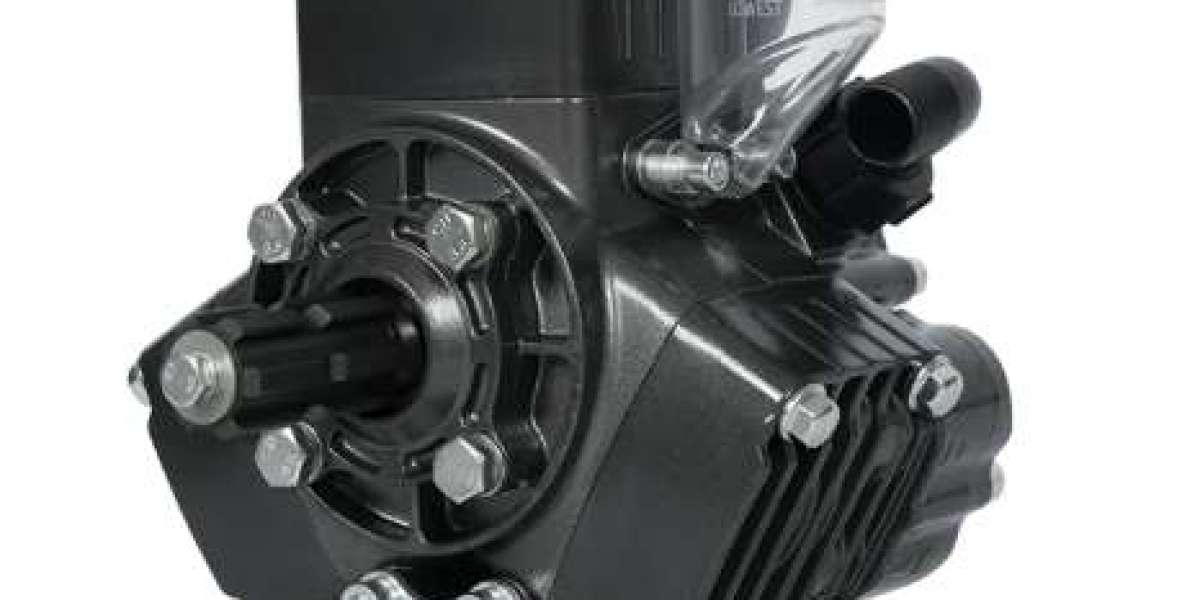

Agricultural pesticide application requires equipment capable of moving treatment liquids reliably through a controlled distribution system. The pump must handle the intended formulation while supporting the operation of filters, hoses, regulators, and spray nozzles. A Diaphragm Pump For Pesticides uses a flexible membrane to move liquid through a pumping chamber, with inlet and outlet valves controlling the direction of flow. This arrangement can be suitable for agricultural chemical applications when the wetted materials are compatible with the pesticide formulation and the equipment is maintained according to the manufacturer's instructions.
The operating principle is based on the repeated movement of the diaphragm. When the diaphragm moves away from the chamber, the internal volume increases and creates suction. Liquid enters through the inlet valve and fills the chamber. During the return movement, the chamber volume decreases and liquid is discharged through the outlet valve. This process repeats to supply the connected spraying system. The diaphragm forms a barrier between the liquid chamber and the main drive mechanism, helping keep the pumped fluid within the intended flow path. The quality of the diaphragm and valve assembly is important for maintaining effective operation.
Chemical compatibility should be considered before a pump is selected or put into service. Pesticide products can contain different active ingredients, solvents, additives, and carrier liquids. Their chemical properties may affect rubber, plastic, and metal components in different ways. A diaphragm that performs well with one formulation may not be appropriate for another. Valve seats, seals, gaskets, and internal surfaces also need to withstand contact with the intended liquid. Buyers should consult the pump manufacturer's material guidance and the pesticide supplier's handling instructions rather than assuming that all agricultural chemicals are interchangeable.
Sealing performance is especially important in chemical transfer applications. The diaphragm must maintain an effective barrier during repeated movement, while valves need to close properly to limit unwanted reverse flow. Poor sealing can lead to leakage, reduced delivery consistency, or chemical exposure around the equipment. Correct assembly and regular inspection help reduce these risks. Connections should be secure, hoses should be suitable for the liquid being transferred, and the entire fluid path should be checked for deterioration. Any damaged component should be replaced with a compatible part recommended for the pump model.
The pump also needs to work in coordination with the spraying system. Liquid moves from the storage tank through an inlet filter and into the pump before reaching the regulator, distribution hoses, and nozzles. A blocked filter may restrict supply, while a worn valve can interfere with the pumping cycle. The nozzle arrangement determines how liquid is distributed across the target area, so the pump must be appropriate for the system's overall demand. A balanced arrangement helps support consistent spraying and reduces unnecessary strain on individual components.
Agricultural operating environments create additional challenges. Equipment may be exposed to dust, moisture, vibration, temperature changes, and movement across uneven ground. The pump housing and mounting structure should be suitable for these conditions. Hoses and fittings need to be positioned to avoid rubbing, twisting, or contact with moving machine parts. Operators should also ensure that the pump is installed in a location that allows inspection and servicing. These practical considerations help protect the equipment and make maintenance more manageable.
Cleaning procedures are particularly important after pesticide application. Residual chemicals may remain inside the chamber, valves, hoses, and nozzles. If they are not removed appropriately, deposits may form or incompatible liquids may mix during later use. Flushing should follow the pesticide label, relevant safety procedures, and the pump manufacturer's recommendations. Operators should use suitable protective equipment and manage cleaning residues according to applicable handling and disposal requirements. Filters should also be checked for accumulated particles or formulation residues.
Manufacturing quality contributes to dependable chemical handling. Diaphragm consistency, valve accuracy, sealing surfaces, and housing integrity all influence the finished pump. Careful assembly and functional testing help confirm that the components work together as intended. For equipment manufacturers and distributors, clear technical documentation and access to compatible replacement parts are valuable because they help customers maintain the pump and select suitable applications. Product support should include material information so users can evaluate compatibility with their specific chemical formulations.
Choosing suitable equipment requires an understanding of the pesticide formulation, spraying method, working environment, and maintenance process. A pump should be assessed as part of the complete chemical delivery system rather than as an isolated component. A properly selected Diaphragm Pump For Pesticides can support controlled liquid movement when its wetted materials, seals, and operating conditions are appropriate for the intended application. SHUANG DIN Co Ltd. provides additional information about agricultural pump engineering and product solutions at https://www.agriculturaldiaphragmpump.com/about/.